
01 / HUMAN PERFORMANCE
Eye tracking in pilot training: making attention visible
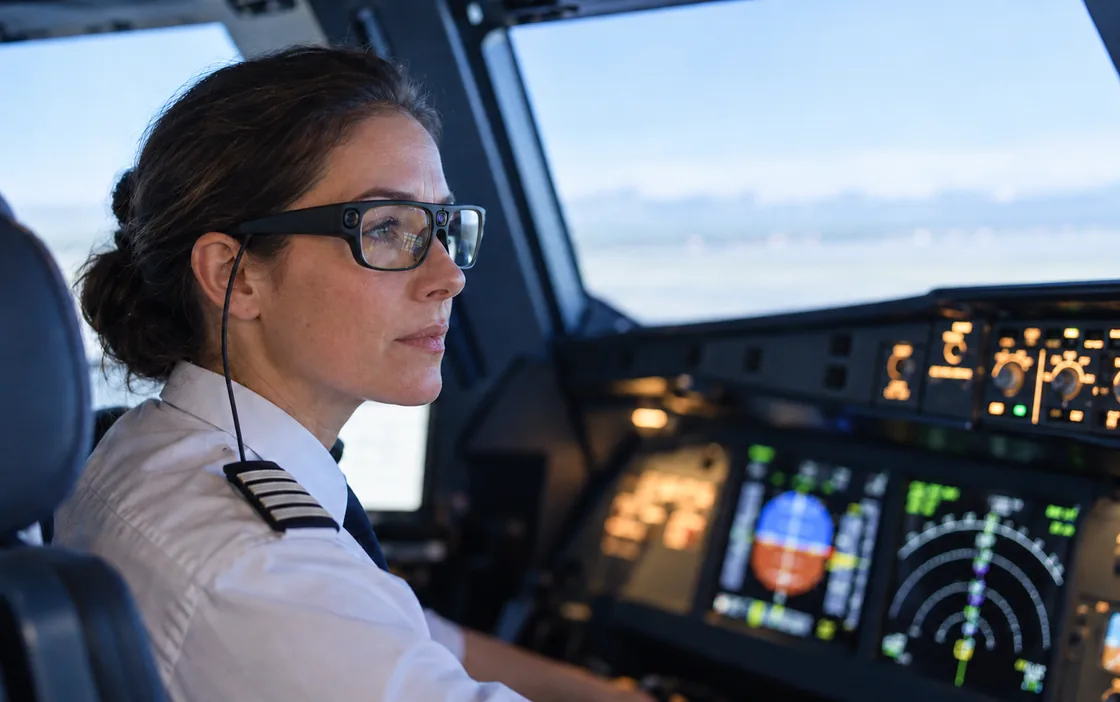
An instructor can see a pilot’s actions. Seeing which information the pilot checked—and which cues were missed—adds another layer to the debrief.
A promising training result
In a randomised study of 20 general-aviation student pilots ↗, gaze-based training improved instrument scanning during simulated entry into instrument meteorological conditions. All ten trained pilots retained aircraft control; five of the ten control pilots lost control. This was a small simulator experiment involving students, rather than evidence of an airline-wide safety improvement.
Evidence from the airline simulator
A separate Airbus A320 study analysed 43 landing scenarios flown by 15 pilots ↗. Eye tracking made their scanning patterns available for analysis and helped researchers examine whether those patterns followed the expected flight protocol.
Visual attention allocation in CBTA
Aviation research uses visual attention allocation ↗ for the distribution of visual attention; visual scanning describes how the eyes move between information sources. Eye tracking makes these patterns measurable.
In Firefly’s CBTA+ concept, those records supplement the instructor’s assessment of nine pilot competencies. They help locate delayed checks or a narrowing scan in an exercise. A gaze record supports the debrief; it does not by itself establish comprehension or situational awareness.
Attention is one part of the story. Pilot communication helps explain how the crew interpreted what they saw.
Sources and further reading
- Improving the tactical scanning of student pilots ↗Ahmadi, Romoser & Salmon · Applied Ergonomics, 2022 · Randomised simulator study
- Using eye tracking to support professional learning: a case of aviation pilots ↗Hämäläinen et al. · Education and Information Technologies, 2024 · A320 simulator study
- Simulating Visual Attention Allocation of Pilots in an Advanced Cockpit Environment ↗Frische, Osterloh & Lüdtke · OFFIS · MODSIM conference paper, NASA NTRS, 2011