
04 / HUMAN PERFORMANCE
A fuller human perspective on pilot performance
An aircraft records what happened to the flight. Human-performance research asks how the crew experienced the situation and worked through it.
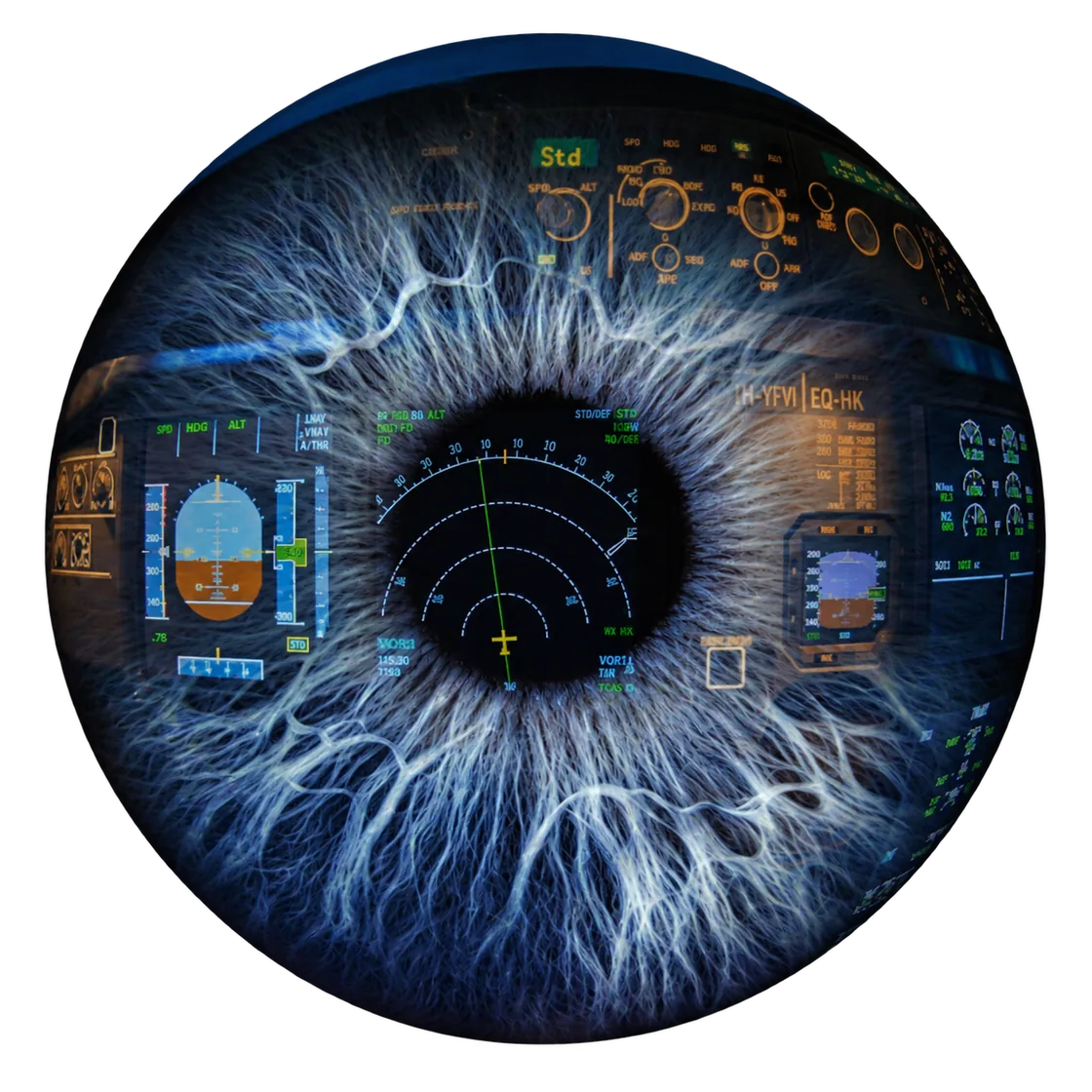
Combine complementary signals
Gaze shows visual behaviour. Audio records communication. Psychophysiological measures, such as heart activity, add evidence about workload. In a simulator study with 26 pilot cadets ↗, a research model combining speech, ECG and eye tracking classified workload with 87.36% accuracy within the study’s task. That result supports investigating the signals together; it is not a Firefly performance figure.
Improve the environment as well
The opportunity extends beyond correcting an individual scan or callout. Research at CSIR National Aerospace Laboratories ↗ used eye tracking and flight data to evaluate cockpit design. Connected evidence can help teams investigate whether a recurring difficulty comes from a learned behaviour, a procedure’s demands, or the way information is presented.
CBTA+ and a wider research perspective
Firefly calls its approach CBTA+: nine instructor-assessed competencies enriched by objective visual attention and communication records. These complement instructor judgement within CBTA/EBT. The wider research perspective also explores psychophysiological measures, with the aim of understanding human–environment interaction and informing clearer procedures and better cockpit interfaces.
To make those observations useful during training, they need an operational frame. That is the role of cockpit context and yETI.
Sources and further reading
- Recognising mental workload by fusing speech, ECG and eye tracking ↗Xu et al. · Ergonomics, 2026; first published online in 2025 · 26-cadet simulator study
- Using Eye Tracker to Evaluate Cockpit Design — A Flight Simulation Study ↗Hebbar, Pashilkar & Biswas · Author manuscript, 2021; Aviation, 2022